

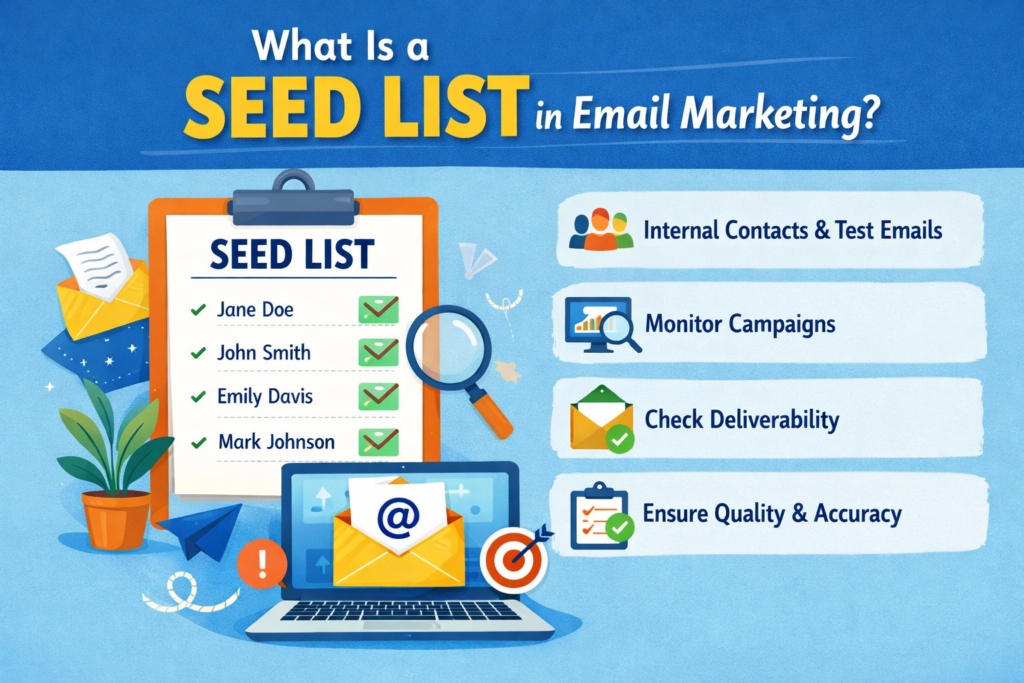
A seed list is a poA seed list is a simple but powerful way to test how emails perform before they reach your actual audience. Instead of guessing where your emails will land, marketers use a group of test email accounts to track delivery behavior.
This method helps identify whether emails reach the inbox, go to spam, or fail completely. It is widely used to improve campaign performance and maintain a strong sender reputation.
Understanding the Concept
A seed list is a collection of test email addresses created specifically for monitoring email campaigns. These addresses are usually set up across different providers to simulate real user environments.
Gmail, Yahoo Mail, and Outlook are commonly included to check how emails behave across platforms.
By reviewing results from these accounts, marketers can quickly spot potential issues.
Why It Matters for Email Campaigns
Using test accounts provides valuable insights that help improve overall performance.
Better Visibility
You can clearly see whether messages land in the inbox, promotions tab, or spam folder.
Early Issue Detection
Problems like poor formatting, spam triggers, or technical errors can be identified before sending to real users.
Safer Campaign Testing
It allows you to test subject lines and design without risking your reputation.
Stronger Deliverability
Fixing issues early improves long-term email performance and reliability.
How the Process Works
When a campaign is sent, the same email is delivered to the test accounts. These accounts help you evaluate:
- Delivery success
- Inbox placement
- Timing of delivery
- Any bounce or failure
This feedback helps you optimize campaigns before scaling.
What to Include for Accurate Results
A well-prepared setup should cover multiple environments to reflect real conditions.
Popular Email Services
Include accounts from widely used platforms to ensure broad coverage.
Different Domains
Using various domains improves testing accuracy.
Active Accounts
Make sure all test inboxes are active and checked regularly.
Filtering Differences
Accounts with different spam settings can provide more realistic insights.
Best Practices to Follow
To get reliable results, use the following strategies.
Keep It Updated
Review and maintain your test accounts regularly.
Avoid Overuse
Sending too many emails to test accounts can affect accuracy.
Use Alongside Verification
Combine this method with email verification tools to maintain list quality.
Analyze Results Carefully
Look for patterns across providers instead of focusing on one result.
Common Mistakes to Avoid
Avoid these issues to ensure accurate insights.
Ignoring Data
Failing to review results defeats the purpose of testing.
Limited Coverage
Using too few accounts may not reflect real-world behavior.
Relying on One Method Only
Testing should be combined with analytics and performance tracking tools.
Frequently Asked Questions (FAQs)
What is the purpose of a seed list?
It helps monitor how emails are delivered and where they appear, such as inbox or spam.
How many test accounts should I use?
Using multiple accounts across major providers gives more reliable insights.
Can it improve email performance?
Yes, it helps identify and fix issues early, improving deliverability.
Is it the same as a subscriber list?
No, test accounts are only for monitoring, while subscriber lists contain real users.
Does it affect campaign metrics?
It can slightly influence metrics, so it is best to exclude these accounts from reports.
How often should I update it?
Regular updates ensure all accounts remain active and accurate.
Final Thoughts
Using a seed list is a practical way to improve email marketing results. It gives you a clear picture of how emails perform and helps you fix problems before they impact your audience.
With the right approach, you can achieve better inbox placement, stronger engagement, and more reliable campaign performance without over-optimizing your strategy.