

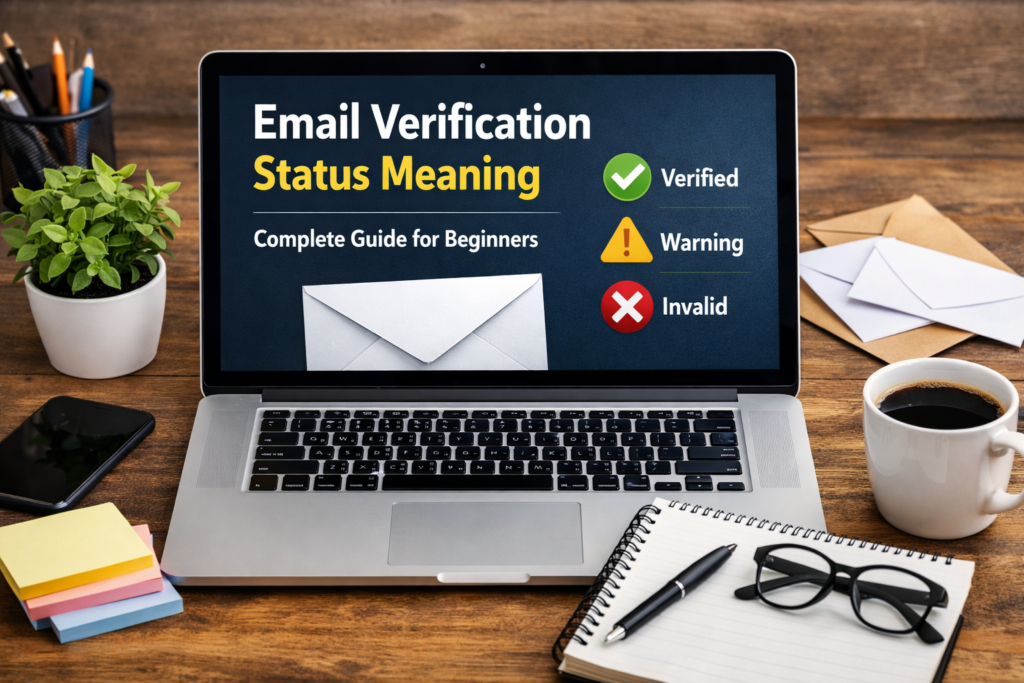
Email Verification Status Meaning: Complete Guide
Email marketing success depends heavily on the quality of your email list. One of the most important factors is understanding email verification status meaning. Whether you are running campaigns or managing a subscriber database, knowing what each status represents helps you avoid delivery issues and improve performance.
What Is Email Verification Status?
Email verification status refers to the result you get after checking whether an email address is valid, safe to use, and capable of receiving messages.
When you run an email through a verification tool, it analyzes multiple factors such as format, domain, mailbox existence, and server response. Based on these checks, the system assigns a status.
Understanding these results helps you decide whether to keep, remove, or review an email address.
Why Email Verification Status Matters
Using unverified or poor-quality email lists can harm your sender reputation. Understanding email verification status meaning is important because it helps reduce bounce rates, improve email deliverability, protect sender reputation, increase open and click rates, and save marketing costs.
Common Email Verification Status Types
Valid Email
A valid email address is safe to use. It exists, has a working domain, and can receive emails. These are the best contacts for your campaigns.
Invalid Email
An invalid email address does not exist or has errors. Sending emails to these addresses will result in hard bounces, so they should be removed immediately.
Risky Email
Risky emails are technically valid but may cause issues. These include catch-all domains, role-based emails like info@ or admin@, and temporary or disposable emails. These should be used with caution.
Unknown Email
This status means the verification tool could not confirm the email’s validity. It may happen due to server restrictions or temporary issues.
Spam Trap
Spam traps are dangerous email addresses used to catch spammers. Sending emails to them can severely damage your sender reputation.
How Email Verification Works
Email verification tools perform multiple checks to determine status. These include syntax validation to ensure correct format, domain verification, mail server validation, mailbox existence checks, and role-based detection.
How to Use Email Verification Status Effectively
To make the most of email verification status meaning, you should remove all invalid emails from your list, segment risky emails and monitor their engagement, avoid sending to unknown addresses, regularly clean your database, and use double opt-in methods to improve list quality.
Benefits of Cleaning Your Email List
When you act on verification statuses, you improve inbox placement, boost campaign performance, reduce bounce rates, enhance your sender score, and increase overall return on investment.
Common Mistakes to Avoid
Many marketers misunderstand email verification results. Common mistakes include ignoring risky emails, sending repeatedly to unknown addresses, failing to clean lists regularly, overlooking spam traps, and using outdated databases.
Conclusion
Email verification status is more than just a label. It provides valuable insight into the quality of your email list. By understanding email verification status meaning, you can improve deliverability, protect your sender reputation, and achieve better campaign results.
FAQs
What does email verification status mean?
It shows whether an email address is valid, invalid, risky, or unknown based on verification checks.
Is a risky email safe to use?
Risky emails can be used carefully, but they may affect deliverability and engagement.
What happens if I send emails to invalid addresses?
You may experience high bounce rates, which can harm your sender reputation.
How often should I verify my email list?
It is best to verify your email list regularly, especially before running campaigns.
Can email verification improve open rates?
Yes, removing invalid emails ensures your messages reach real users, which improves open and click rates.
Ready to clean your list? Download TsEmailValidator.exe — Free (200 emails) or Lifetime for $43 (pay once, unlimited forever). Support: support@timesolutionz.com.