

What Is Email Bounce?
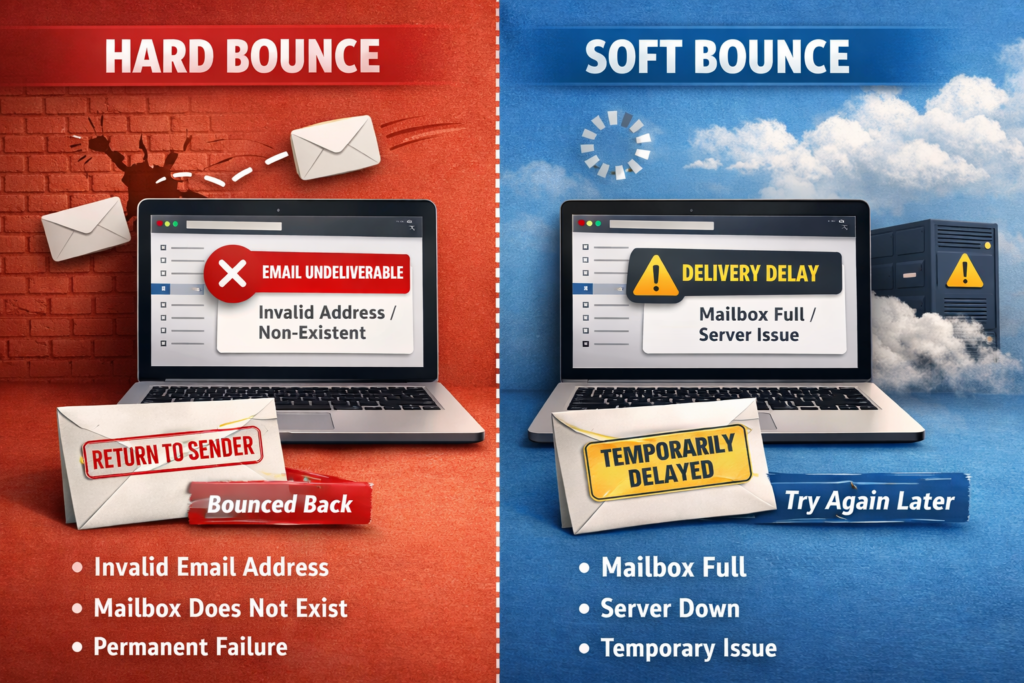
Email bounce refers to a situation where your email fails to reach the recipient’s inbox. Instead, it is returned to the sender with an error message. Bounces are a critical metric in email marketing because they directly impact your sender reputation and deliverability rates.
There are two main types of email bounces: hard bounce and soft bounce. Understanding the difference between them helps you maintain a clean email list and improve campaign performance.
What Is a Hard Bounce Email?
A hard bounce is a permanent failure in email delivery. This means the email cannot be delivered under any circumstances.
Common Causes of Hard Bounce
Invalid or non-existent email address
Misspelled email addresses
Domain does not exist
Recipient server has permanently blocked your email
Why Hard Bounce Matters
Hard bounces are serious because they indicate that the email address is completely unusable. Sending emails repeatedly to such addresses can damage your sender reputation and may even lead to blacklisting.
What You Should Do
Remove hard bounce emails immediately from your list
Use email validation tools to prevent invalid addresses
Regularly clean your email database
What Is a Soft Bounce Email?
A soft bounce is a temporary delivery failure. This means the email could not be delivered at the moment, but it might succeed later.
Common Causes of Soft Bounce
Recipient’s mailbox is full
Email size is too large
Temporary server issues
Recipient server is down or busy
Why Soft Bounce Matters
Soft bounces are less severe than hard bounces, but they still require attention. Repeated soft bounces may eventually turn into hard bounces if the issue persists.
What You Should Do
Retry sending emails after some time
Monitor repeated soft bounces
Remove addresses that continuously soft bounce
Hard Bounce vs Soft Bounce Email: Key Differences
Hard bounce is a permanent failure, while soft bounce is a temporary issue.
Hard bounce occurs due to invalid email addresses, whereas soft bounce happens بسبب temporary problems like full inbox or server downtime.
Hard bounces have a higher negative impact on sender reputation compared to soft bounces.
Hard bounce emails should be removed immediately, while soft bounce emails should be monitored first.
Hard bounce cannot be fixed, but soft bounce issues may resolve over time.
How Email Bounces Affect Your Campaigns
Email bounces directly influence your email marketing success. High bounce rates can lower your email deliverability, harm your sender reputation, increase the chances of being marked as spam, and reduce overall engagement rates.
Maintaining a low bounce rate is essential for reaching your audience effectively.
Best Practices to Reduce Email Bounces
Use Email Validation Tools
Verify email addresses before sending campaigns to reduce hard bounces.
Maintain a Clean Email List
Regularly remove inactive, invalid, or bounced emails.
Avoid Buying Email Lists
Purchased lists often contain invalid or outdated addresses.
Optimize Email Content
Ensure your emails are not too large and follow proper formatting.
Monitor Bounce Rates
Track your email performance and take action when bounce rates increase.
Conclusion
Understanding the difference between hard bounce and soft bounce email is crucial for improving your email marketing strategy. Hard bounces indicate permanent issues and require immediate removal, while soft bounces are temporary and need monitoring.
By maintaining a clean email list and following best practices, you can reduce bounce rates, protect your sender reputation, and achieve better email deliverability.
FAQs
Q: What is worse: hard bounce or soft bounce?
Hard bounce is worse because it indicates a permanent delivery failure and can harm your sender reputation.
Q: Can a soft bounce turn into a hard bounce?
Yes, if the issue persists over time, a soft bounce can eventually become a hard bounce.
Q: How do I fix email bounce issues?
Use email validation, clean your email list regularly, and monitor your campaign performance.
Q: What is a good bounce rate?
A bounce rate below 2% is generally considered good for email marketing campaigns.
Q: Should I remove soft bounce emails?
Not immediately. Monitor them first, but remove them if they continue to bounce repeatedly.
Ready to clean your list? Download TsEmailValidator.exe — Free (200 emails) or Lifetime for $43 (pay once, unlimited forever). Support: support@timesolutionz.com.