

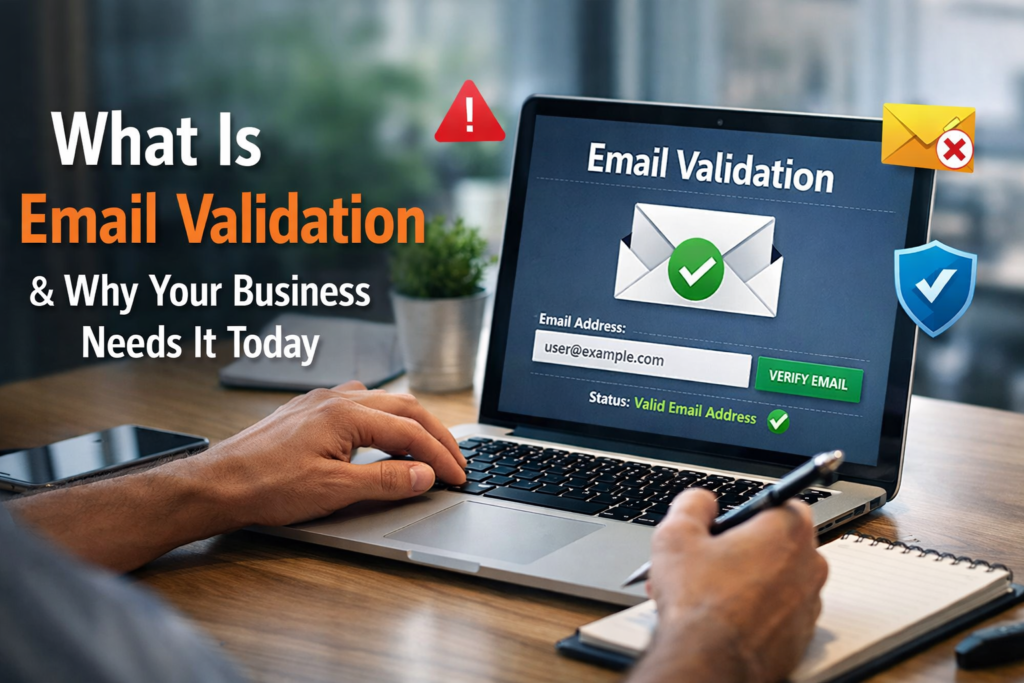
Email marketing remains one of the most powerful digital marketing channels, but its success depends heavily on the quality of your email list. This is where email validation plays a crucial role. Without proper validation, businesses risk sending emails to invalid or fake addresses, leading to poor performance and wasted resources.
What Is Email Validation?
It is the process of verifying whether an email address is accurate, active, and capable of receiving messages. It involves multiple checks, including syntax verification, domain validation, and mailbox existence.
This process helps businesses ensure that their email lists are clean, reliable, and free from invalid or harmful addresses. By using email validation, companies can avoid sending messages to non-existent users or spam traps.
How Email Validation Works
It works through a series of automated checks designed to filter out low-quality or risky email addresses. These checks typically include:
- Syntax Check: Ensures the email format is correct (e.g., name@domain.com)
- Domain Verification: Confirms that the domain exists and is active
- Mailbox Detection: Checks if the email inbox actually exists
- Disposable Email Detection: Identifies temporary or fake email addresses
- Spam Trap Identification: Detects addresses used to catch spammers
Together, these steps help maintain a high-quality email database.
Why Email Validation Is Important for Your Business
Maintaining a clean email list is essential for any business that relies on email communication. Here are the key reasons why email validation matters:
1. Improves Email Deliverability
Sending emails to valid addresses increases the chances that your messages will reach the inbox instead of the spam folder. High deliverability ensures better campaign performance and engagement.
2. Reduces Bounce Rates
Invalid email addresses lead to hard bounces, which negatively impact your sender reputation. It removes these addresses, helping you maintain a low bounce rate.
3. Protects Sender Reputation
Internet Service Providers (ISPs) monitor your sending behavior. Too many bounces or spam complaints can damage your reputation. A validated email list keeps your reputation strong and trustworthy.
4. Saves Time and Money
Every email sent to an invalid address wastes resources. It ensures you only target real users, making your campaigns more cost-effective.
5. Enhances Marketing Performance
A clean list means better open rates, higher click-through rates, and improved conversions. You are communicating with real users who are more likely to engage with your content.
When Should You Use Email Validation?
It should not be a one-time task. Instead, it should be part of your ongoing email strategy. Consider validating your emails:
- Before launching a new campaign
- When importing a new email list
- Regularly to maintain list hygiene
- During user signup to prevent fake entries
Best Practices for Email Validation
To get the most out of email validation, follow these best practices:
- Use real-time validation on signup forms
- Regularly clean your email database
- Avoid purchasing email lists
- Combine validation with double opt-in methods
- Monitor email performance metrics
Conclusion
Email validation is no longer optional in today’s competitive digital landscape. It is a fundamental practice that ensures your email marketing efforts are effective, efficient, and reliable. By validating your email list, you protect your sender reputation, improve deliverability, and maximize your return on investment.
Businesses that prioritize email validation gain a clear advantage by reaching the right audience with the right message. If you want better results from your email campaigns, investing in email validation is a smart and necessary step.
FAQs About Email Validation
What is the difference between email validation and email verification?
Email validation checks whether an email address is properly formatted and exists, while email verification goes a step further by confirming that the mailbox can actually receive messages. In simple terms, validation is the first step, and verification is a deeper check.
How often should I validate my email list?
You should validate your email list regularly, especially before running campaigns or after collecting new data. Many businesses clean their lists monthly or quarterly to maintain accuracy and performance.
Can email validation improve open rates?
Yes, email validation helps improve open rates by ensuring your emails are sent to real and active users. When your list contains fewer invalid or inactive addresses, engagement naturally increases.
Is email validation safe for my data?
Most professional email validation tools use secure processes and do not store or misuse your data. However, it is important to choose a trusted provider with strong data protection policies.
What are disposable email addresses and why should I remove them?
Disposable email addresses are temporary emails used for short-term purposes. They often lead to low engagement and can harm your campaign performance, so removing them helps maintain a high-quality email list.
Does email validation prevent emails from going to spam?
While it does not guarantee inbox placement, email validation significantly reduces the risk of emails being marked as spam by improving list quality and sender reputation.
Can I validate emails in real-time?
Yes, many tools offer real-time validation that checks email addresses as users enter them on signup forms. This helps prevent invalid or fake emails from entering your database in the first place.