

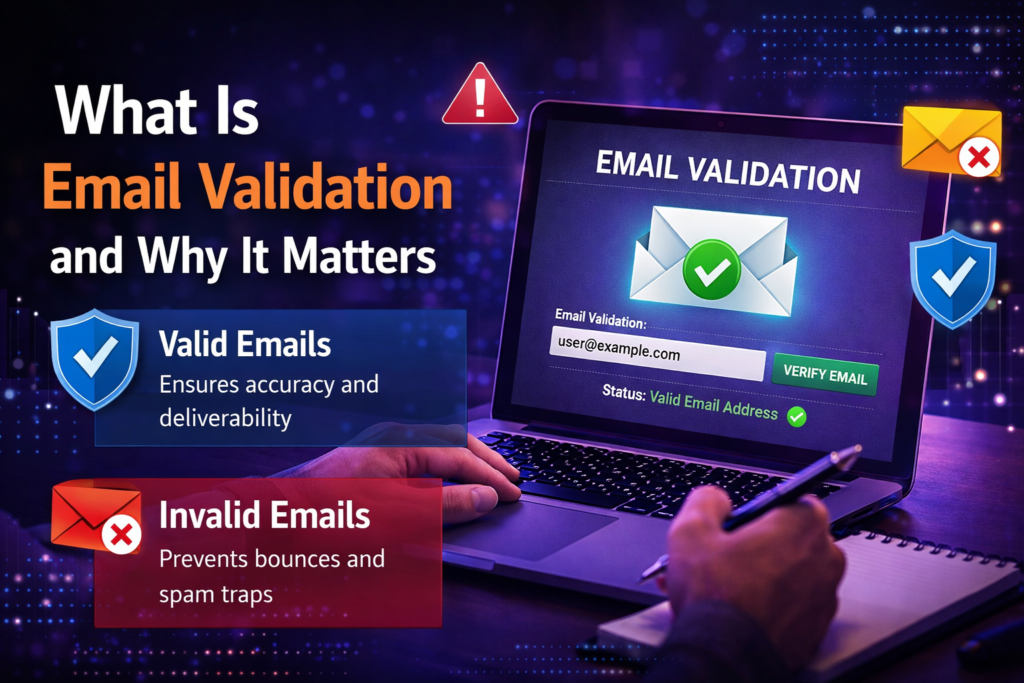
Email marketing remains one of the most effective digital marketing channels, but its success depends heavily on the quality of your email list. This is where email validation becomes essential. It ensures that the email addresses you collect are real, active, and safe to use, helping you achieve better results and avoid costly mistakes.
What is Email Validation?
Email validation is the process of verifying whether an email address is valid, correctly formatted, and capable of receiving messages. It checks for common errors such as typos, fake addresses, inactive domains, and risky email accounts.
This process typically involves multiple checks, including syntax validation, domain verification, and mailbox confirmation. By filtering out invalid or harmful email addresses, businesses can maintain a clean and reliable email list.
How Email Validation Works
Email validation tools use advanced methods to ensure the accuracy of email addresses. Here’s how the process generally works:
1. Syntax Check
The tool verifies if the email address follows the correct format (e.g., name@domain.com). Any formatting errors are flagged immediately.
2. Domain Verification
It checks whether the domain exists and is capable of receiving emails. Invalid or inactive domains are removed from your list.
3. Mailbox Check
Some tools confirm whether the specific mailbox exists without sending an actual email, ensuring higher accuracy.
4. Risk Detection
Email validation also identifies risky addresses such as disposable emails, spam traps, or role-based emails (like info@ or support@).
Why Email Validation Matters
Maintaining a clean email list is critical for any business that relies on email communication. Here’s why email validation is so important:
1. Improves Email Deliverability
Sending emails to valid addresses increases the chances of your messages reaching inboxes instead of spam folders. A clean list helps build trust with email service providers.
2. Reduces Bounce Rates
Invalid or non-existent email addresses lead to hard bounces. High bounce rates can damage your sender reputation and reduce campaign performance.
3. Protects Sender Reputation
Email providers track your sending behavior. Sending to bad addresses can mark your domain as suspicious, affecting future campaigns.
4. Saves Time and Money
Many email marketing platforms charge based on the number of contacts. Removing invalid emails ensures you only pay for real, valuable leads.
5. Increases Engagement Rates
When your emails reach real users, open rates and click-through rates naturally improve, leading to better campaign outcomes.
6. Prevents Spam Traps
Spam traps are email addresses used to catch spammers. Email validation helps identify and remove them, protecting your reputation.
Key Benefits of Email Validation
- Cleaner and more accurate email lists
- Better campaign performance
- Higher ROI from email marketing
- Improved inbox placement
- Stronger customer trust
When Should You Use Email Validation?
Email validation should be part of your regular workflow. Here are the best times to use it:
- When collecting emails through forms
- Before launching an email campaign
- After importing a new contact list
- Periodically to clean your database
Best Practices for Email Validation
To get the most out of email validation, follow these best practices:
Use Real-Time Validation
Validate email addresses at the point of entry to prevent bad data from entering your system.
Clean Your List Regularly
Even valid emails can become inactive over time. Regular cleaning ensures your list stays fresh.
Avoid Buying Email Lists
Purchased lists often contain invalid or risky addresses, which can harm your campaigns.
Combine with Double Opt-In
Using a double opt-in process ensures that users confirm their email addresses, improving list quality.
Common Mistakes to Avoid
- Ignoring email validation altogether
- Sending campaigns to outdated lists
- Relying only on basic format checks
- Not removing inactive subscribers
Avoiding these mistakes can significantly improve your email marketing performance.
Conclusion
Email validation is not just a technical step—it’s a critical part of successful email marketing. By ensuring your email list contains only valid and active addresses, you can improve deliverability, protect your sender reputation, and achieve better results from every campaign.
Investing in email validation today can save you from bigger problems in the future while maximizing the impact of your marketing efforts.
FAQs
Q: What is email validation in simple terms?
Email validation is the process of checking if an email address is real, correctly formatted, and able to receive messages.
Q: Why is email validation important?
It helps improve deliverability, reduce bounce rates, and protect your sender reputation.
Q: Can email validation detect fake emails?
Yes, advanced tools can identify fake, disposable, and risky email addresses.
Q: How often should I validate my email list?
You should validate your list regularly, especially before sending campaigns or after collecting new data.
Q: Is email validation necessary for small businesses?
Yes, even small businesses benefit from clean email lists, better engagement, and improved campaign performance.
Ready to clean your list? Download TsEmailValidator.exe — Free (200 emails) or Lifetime for $43 (pay once, unlimited forever). Support: support@timesolutionz.com.